Learn Japanese with Puella Magi Madoka Magica
How hard its Japanese is, real words from it with kana and romaji, where to watch it, and what to watch before and after.
Last updated 30 October 2026
Anime by Japanese level › N3 to N2
The short answer: Ikkimi rates Puella Magi Madoka Magica N3 to N2 for learning Japanese: school talk that turns to abstract ideas. Good for a beginner? Not as a first show. It is harder than most beginner shows. Watch it for fun from the start if you like, but learn your first words from an easier one.
Ikkimi lists Puella Magi Madoka Magica on Crunchyroll and Netflix. What each service carries varies by country. On Crunchyroll, Ikkimi finds a Japanese subtitle file for the episode in Jimaku’s catalogue and lines it up for you. On Netflix, turn on Japanese subtitles and every word becomes clickable.
The Ikkimi web app and Chrome extension come on one plan. The iPhone app is coming soon.
How hard is the Japanese in Puella Magi Madoka Magica?
Ikkimi rates Puella Magi Madoka Magica at N3 to N2 (faster talk with more unusual words). What sets its level: school talk that turns to abstract ideas. Of the 192 anime Ikkimi rates by hand, 112 are easier and 53 are harder.
Levels follow the Japanese Language Proficiency Test, from N5 (easiest) to N1 (hardest). They are Ikkimi’s estimate of how hard a show’s Japanese is to follow, from how fast people talk, how many unusual words there are and how clear the voices are. They are not official JLPT ratings.
| Fact | Puella Magi Madoka Magica |
|---|---|
| Ikkimi’s level | N3 to N2 (faster talk with more unusual words) |
| Why | school talk that turns to abstract ideas |
| Japanese title | 魔法少女まどか☆マギカ |
| Format | TV series |
| Episodes | 12, about 24 minutes each |
| First aired | 2011 |
| Genres | Action, Drama, Fantasy, Mahou Shoujo, Psychological, Thriller |
| Where to watch | Crunchyroll, Netflix |
Format, episodes, year and genres are from AniList’s entry, which may cover only the first season.
The words in the title
The Japanese title, 魔法少女まどか☆マギカ, is a first lesson in itself. Its word, as a dictionary lists it:
| Word | Kana and romaji | Meaning |
|---|---|---|
| 魔法少女 | まほうしょうじょ mahoushoujo | magical girl (in anime, manga, etc.); girl with magical powers; young witch |
How to learn Japanese with Puella Magi Madoka Magica
Ikkimi lists Puella Magi Madoka Magica on Crunchyroll and Netflix. What each service carries varies by country. Ikkimi does not stream anything: you watch on your own account, in Chrome on a computer, and Ikkimi adds a Japanese line you can click on top of the player.
On Crunchyroll
Crunchyroll rarely has Japanese subtitles. On a Crunchyroll episode, Ikkimi looks for a matching Japanese subtitle file in Jimaku’s public catalogue, loads it and lines it up with the episode by itself. If Jimaku has no file for an episode, you can search by hand in the Ikkimi popup or load a subtitle file from your computer.
On Netflix
On Netflix, turn on Japanese subtitles in the player, where your country’s Netflix has them for this title, and Ikkimi makes the line clickable. If there are none, open the Ikkimi popup, choose Find Japanese subtitles, and search Jimaku’s catalogue or load a file from your computer.
Add Ikkimi to Chrome
Get the extension from the Chrome Web Store and sign in.
Play an episode
Open Puella Magi Madoka Magica on Crunchyroll or Netflix. The Japanese line appears on top of the video.
Click the words you keep hearing
The video pauses and the word opens: kana, romaji, meaning, JLPT level and a recording by a native speaker where one exists (never a computer voice; otherwise the line from the show plays again). At this level, turn on the English line under the Japanese at first, and keep only the words that come back.
Review them later
Kept words come back as flashcards on the Ikkimi website, with the scene and the line they came from, just before you would forget them.
Easier and harder shows
Shows within a level of Puella Magi Madoka Magica, with the most genres in common first.
Easier
 N3The Promised Neverland約束のネバーランドchildren talking, plans explained step by stepCrunchyrollNetflix
 N3ONE PIECEloud and clear, pirate words that repeatCrunchyrollNetflix
 N3NarutoNARUTO -ナルト-clear voices, ninja words that repeatCrunchyrollNetflix
Also N3 to N2
 N3 to N2Re:ZERO -Starting Life in Another World-Re:ゼロから始める異世界生活fast emotional monologues, fantasy wordsCrunchyroll
 N3 to N2Tokyo Ghoul東京喰種トーキョーグールdark inner monologue, invented termsCrunchyrollNetflix
 N3 to N2Nausicaä of the Valley of the Wind風の谷のナウシカa film, formal and old-fashioned speechNetflix
Harder
 N2PLUTOpolice and robot words, serious speechNetflix
 N2Attack on Titan進撃の巨人military words, fastCrunchyroll
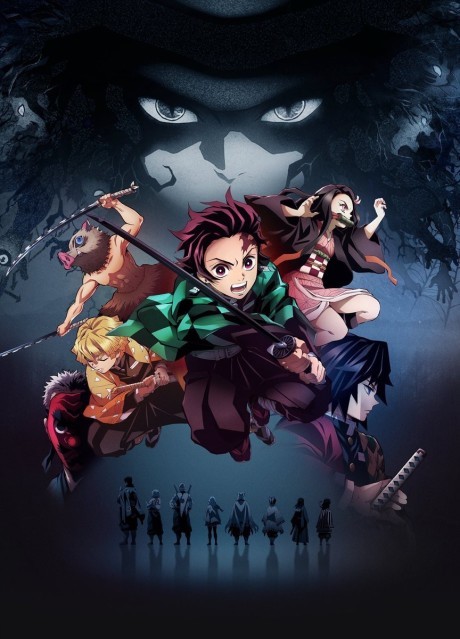 N2Demon Slayer鬼滅の刃old-fashioned speech, a lot of shoutingCrunchyrollNetflix
See every N3 to N2 anime or all 192 anime by Japanese level, and read how to learn Japanese by watching anime from zero.
Questions
Is Puella Magi Madoka Magica good for learning Japanese?
Not as a first show. Ikkimi rates it N3 to N2 (faster talk with more unusual words). What sets its level: school talk that turns to abstract ideas. It is harder than most beginner shows. Watch it for fun from the start if you like, but learn your first words from an easier one.
What Japanese level is Puella Magi Madoka Magica?
N3 to N2, on Ikkimi’s scale from N5 (easiest) to N1 (hardest). Of the 192 anime Ikkimi rates by hand, 112 are easier and 53 are harder. The level is Ikkimi’s estimate, not an official JLPT rating.
Where can I watch Puella Magi Madoka Magica with Japanese subtitles?
Ikkimi lists Puella Magi Madoka Magica on Crunchyroll and Netflix. What each service carries varies by country. Crunchyroll rarely has Japanese subtitles, so Ikkimi looks for a matching file in Jimaku’s catalogue and lines it up with the episode. On Netflix, turn on Japanese subtitles in the player where they are offered, and Ikkimi makes every word clickable.
What does the title 魔法少女まどか☆マギカ mean, word by word?
魔法少女 (mahoushoujo) means “magical girl (in anime, manga, etc.); girl with magical powers; young witch”.
How many episodes does Puella Magi Madoka Magica have?
AniList’s entry lists 12 episodes of about 24 minutes, first aired in 2011. Later seasons may be listed separately.
What should I watch before Puella Magi Madoka Magica?
Shows a little easier than Puella Magi Madoka Magica, with genres in common: The Promised Neverland (N3), ONE PIECE (N3) and Naruto (N3).
Sources: show details from AniList; meanings from JMdict (EDRDG, CC BY-SA 4.0); readings and word splits from kuromoji.js with IPADIC; JLPT word levels from Jonathan Waller’s unofficial lists. See Credits. Spotted a mistake? Tell us at hello@ikkimi.app.
Tonight’s episode is a lesson.
Get Ikkimi